
The Minka and the Community Unite to Defend the Life of Mama Cotacachi
On the afternoon of August 10, the Italquí community, located on the slopes of Mama Cotacachi (Warmi Razu, in Kichwa)—one of the most iconic volcanoes in Imbabura province —reported that a fire was still burning and consuming the volcano’s páramo ecosystem. Immediately and in a coordinated effort, the Cotacachi communities that make up the Union of Indigenous and Peasant Organizations of Cotacachi (UNORCAC), together with the canton’s fire department, formed brigades to put out the fire.
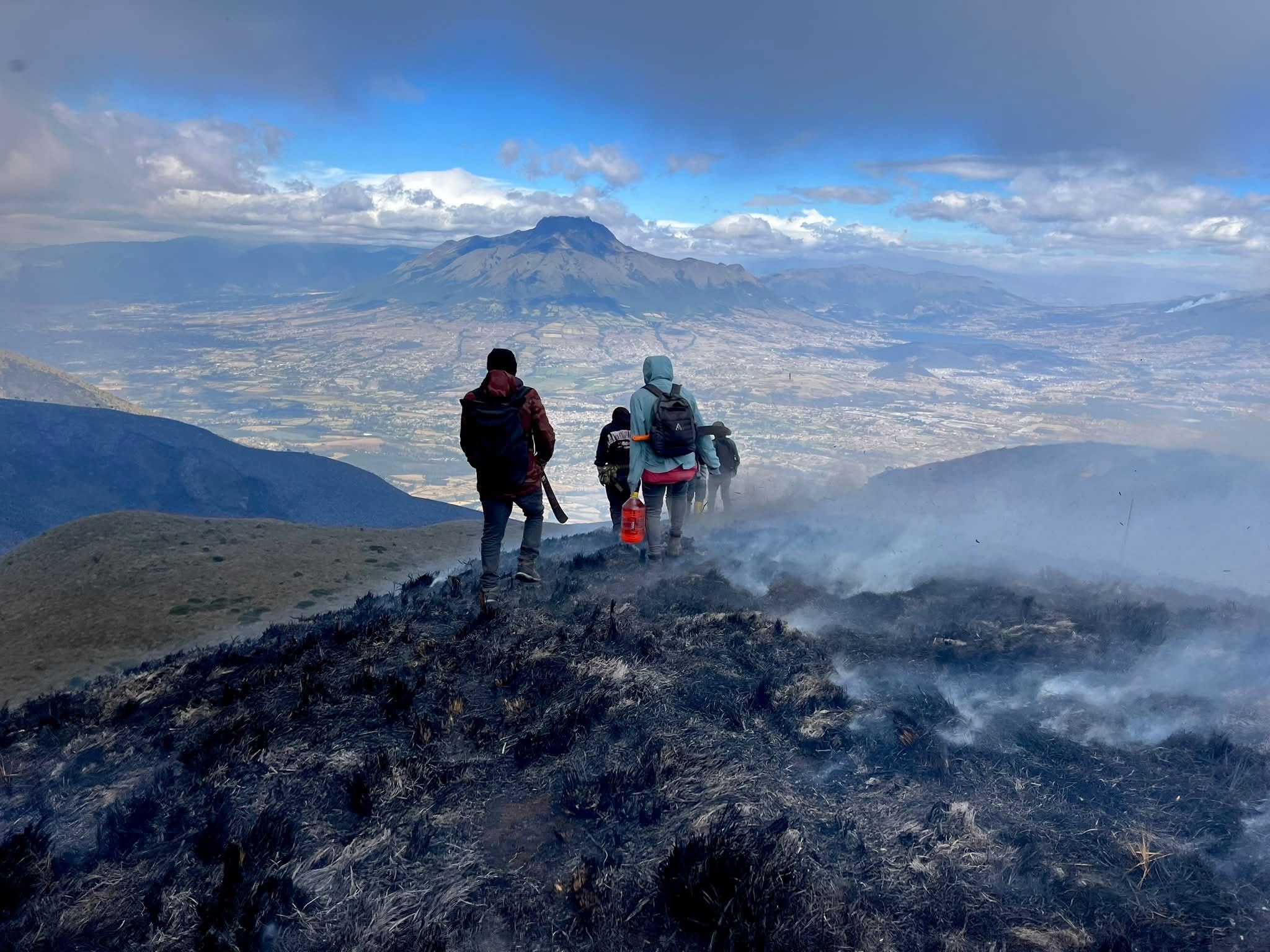
Photo by Turuku community
During the six days it took to extinguish the fire that consumed nearly 1,000 hectares of páramo, we witnessed the power of minka (collective work, in Kichwa) and community life—ancestral practices preserved primarily by indigenous and rural communities in Ecuador. UNORCAC, in coordination with the municipality and the Cantonal Unity Assembly, appealed to the public’s solidarity and launched a campaign to collect donations of protective gear for the firefighting brigades, medical supplies, and food to care for and support the community members and volunteers who came to the defense of Mama Cotacachi.
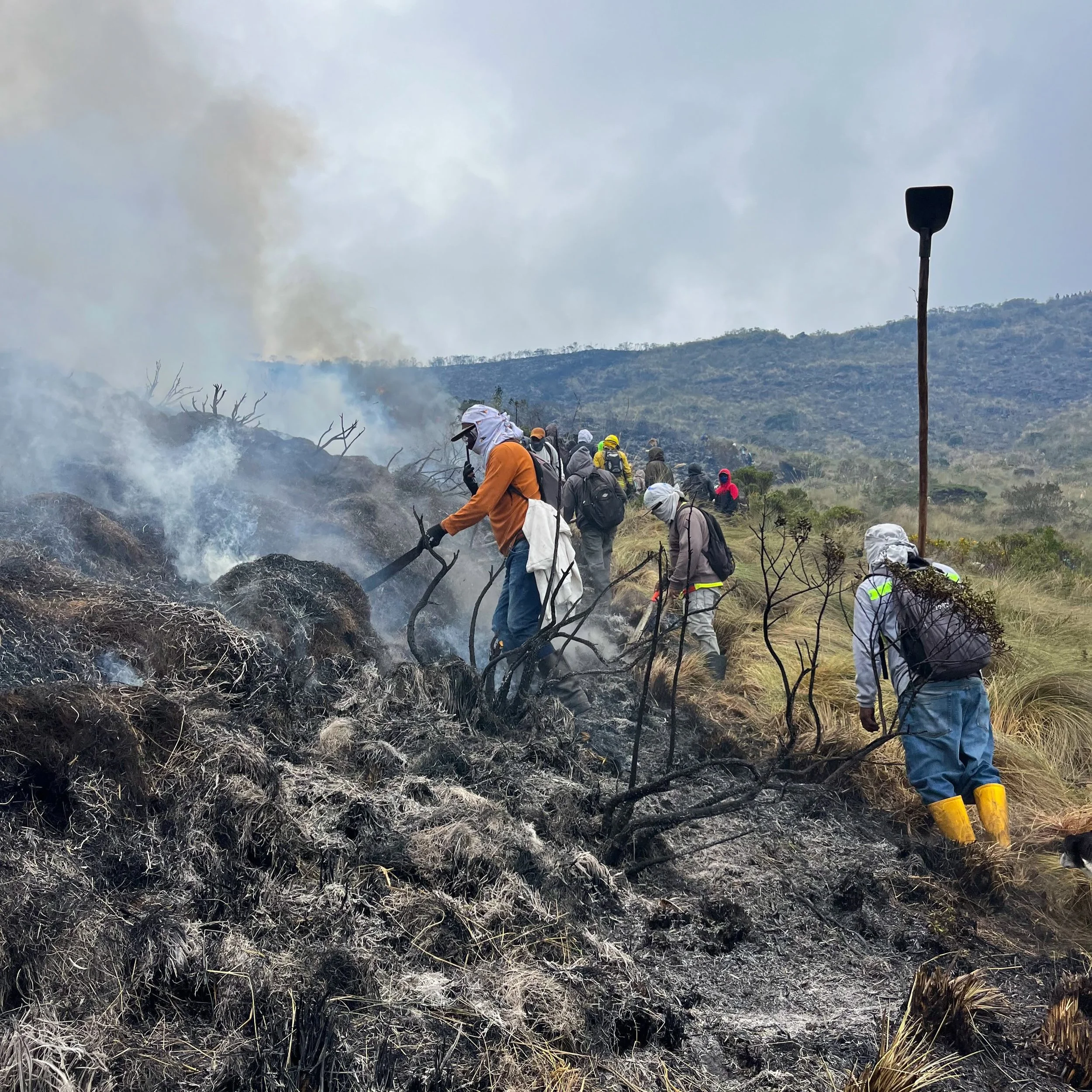
Photo by Turuku community
That is how, day and night, some 900 community members, along with fire departments from Cotacachi and Ambato and park rangers, mobilized all their resources to prevent the fire from consuming a highly sensitive and ecologically important ecosystem across at least four fire hotspots. The Mama Cotacachi is part of Cotacachi-Cayapas National Park, one of the most important parks in the country’s northwest, spanning territories in the provinces of Imbabura and Esmeraldas. It contains páramo and rainforest ecosystems that are part of the Chocó Biogeographic Region and the Tropical Andes. In the area affected by the fire, iconic and endangered species have been recorded, including the Andean bear, the white-tailed deer, the puma (Puma concolor), and the Andean condor, among others
The communities’ love for and connection to their land, as well as their commitment to defending life, stem from their worldview as indigenous peoples. They view the Cotacachi volcano as a great mother who sustains their lives, for the water sources that supply all the communities spring from its páramos. While some community members on the front lines risked their lives amid the fire, the UNORCAC women’s organization held another front line in the community kitchen. From dawn until midnight, they prepared meals for the firefighting brigades and distributed donations to the various communities, where communal cooking pots and first-aid stations were also set up. The “minka for life” was also made possible thanks to the solidarity of the people, who supported the effort and donated whatever they could.
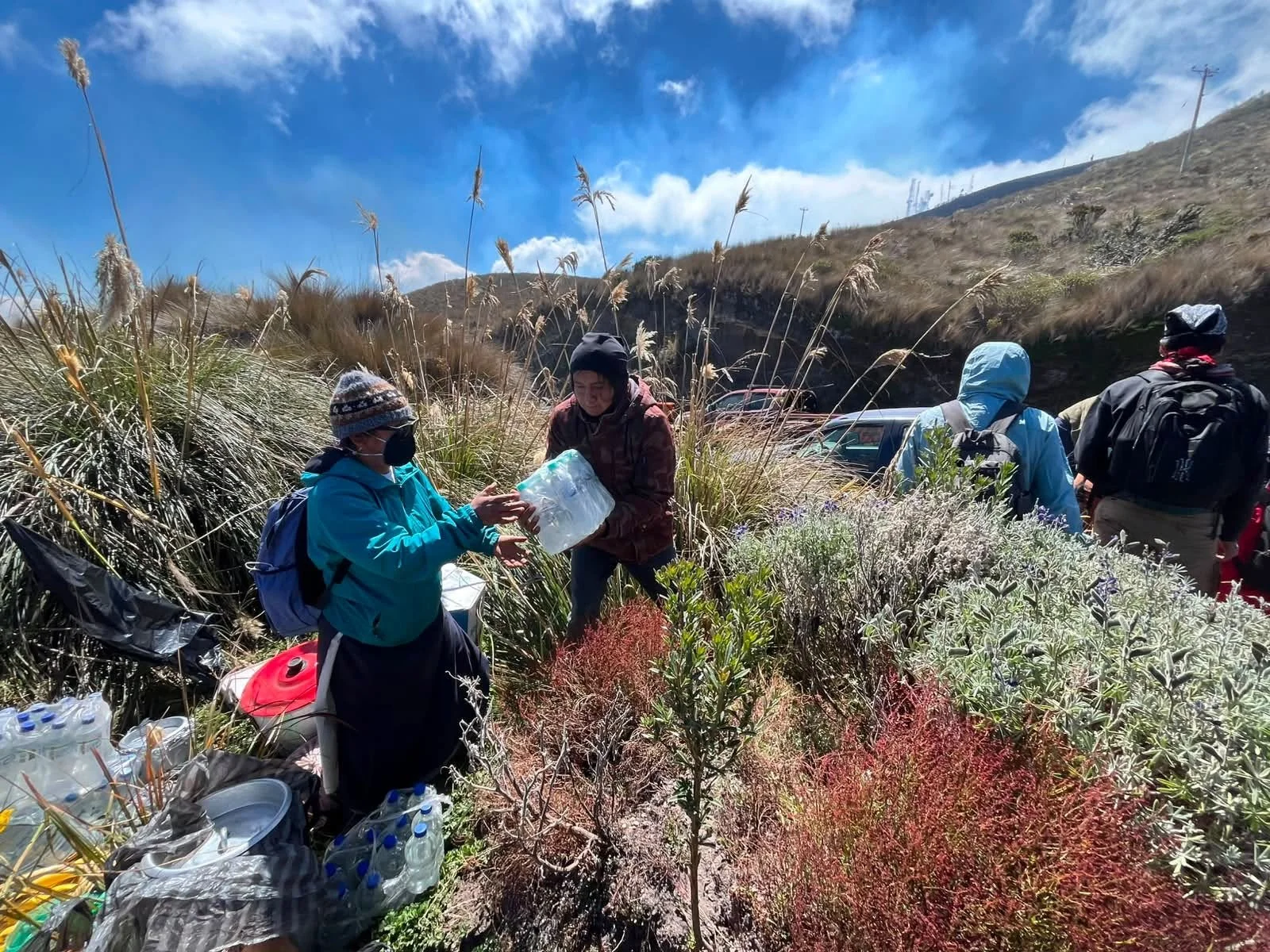
Photo by Turuku community
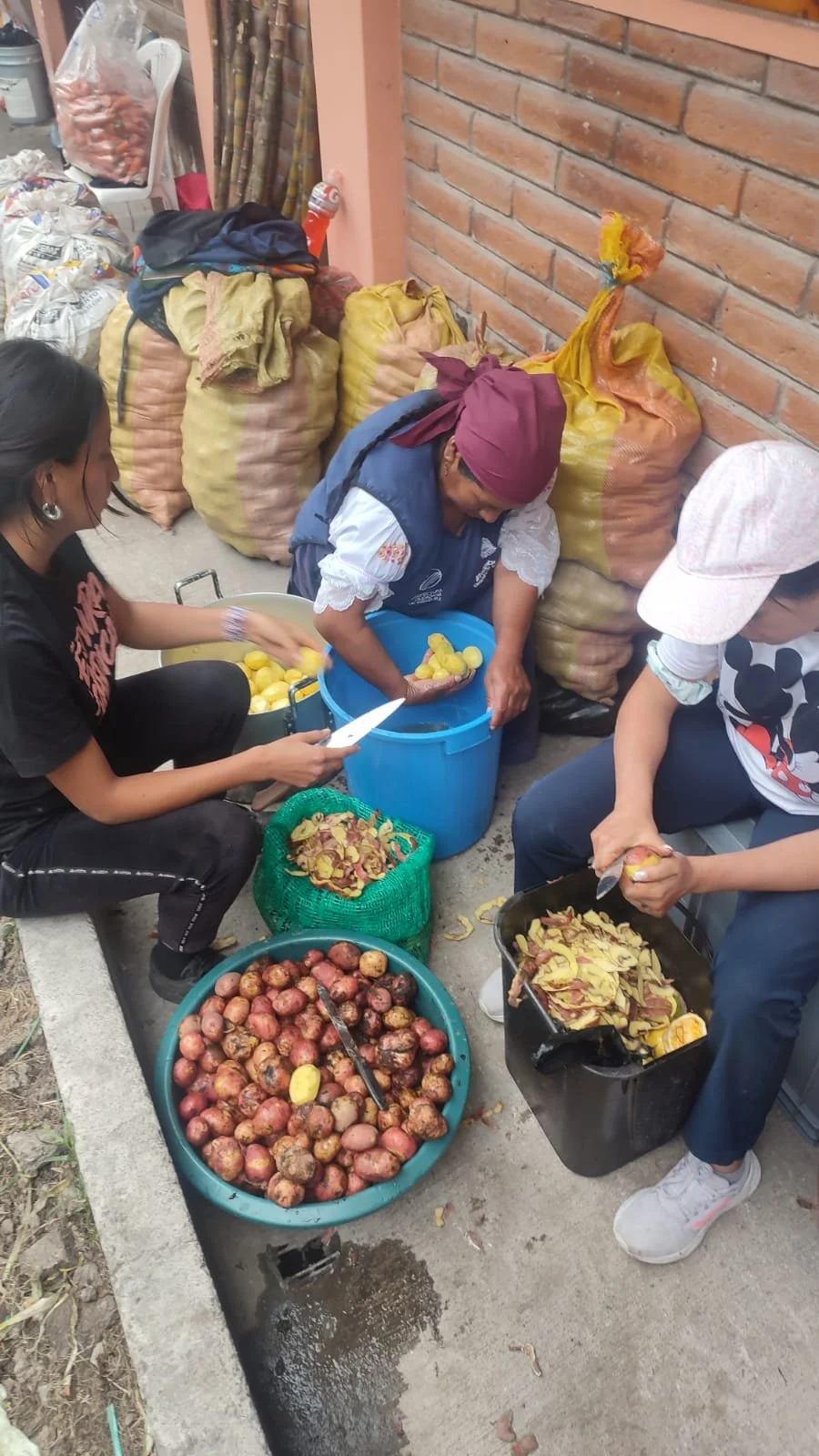
Photo by Monserrate Vásquez
The “minka for life” a movement to protect the life of Mama Cotacachi and the symbiotic relationship that our communities maintain with nature—led us to recall the days of uprisings and the national strike, during which it was the indigenous communities themselves who, on the front lines, paved the way for organization and struggle to defend collective rights and territory against policies that stifle the lives of the majority.
Author: Monserratte Vásquez